Identify the actual wash mechanism
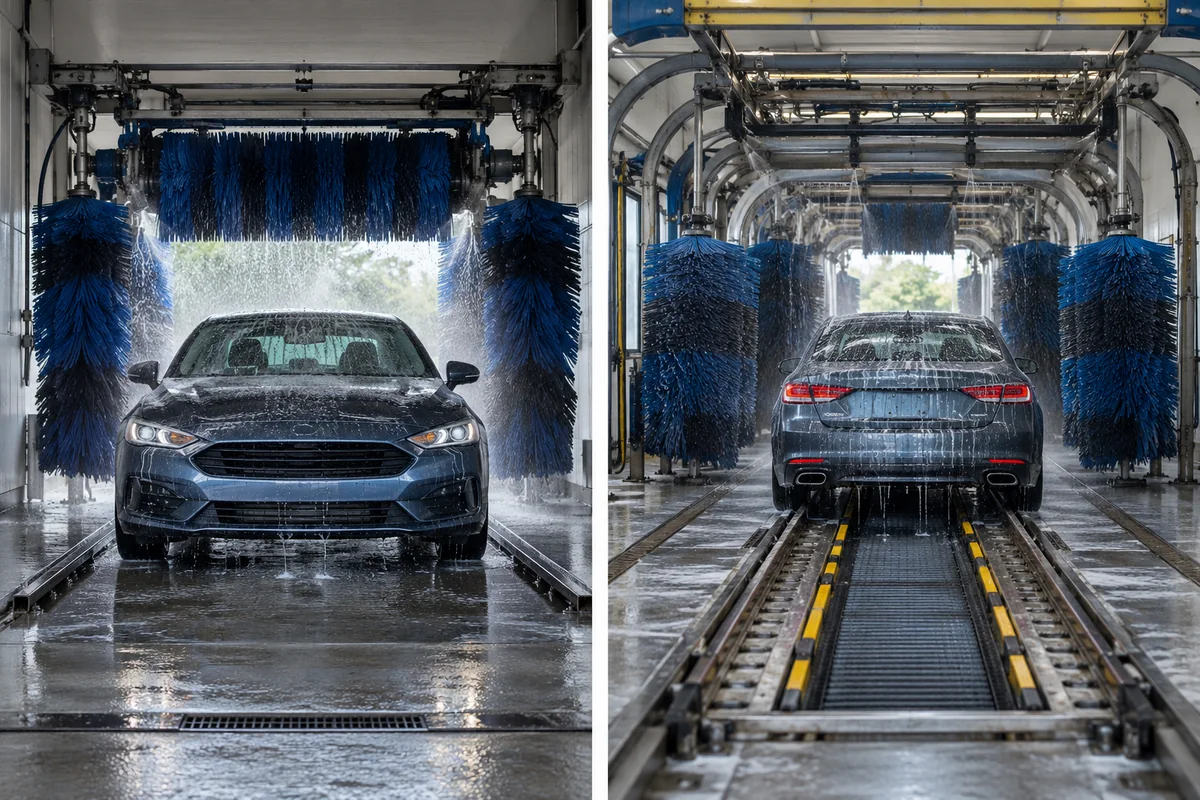
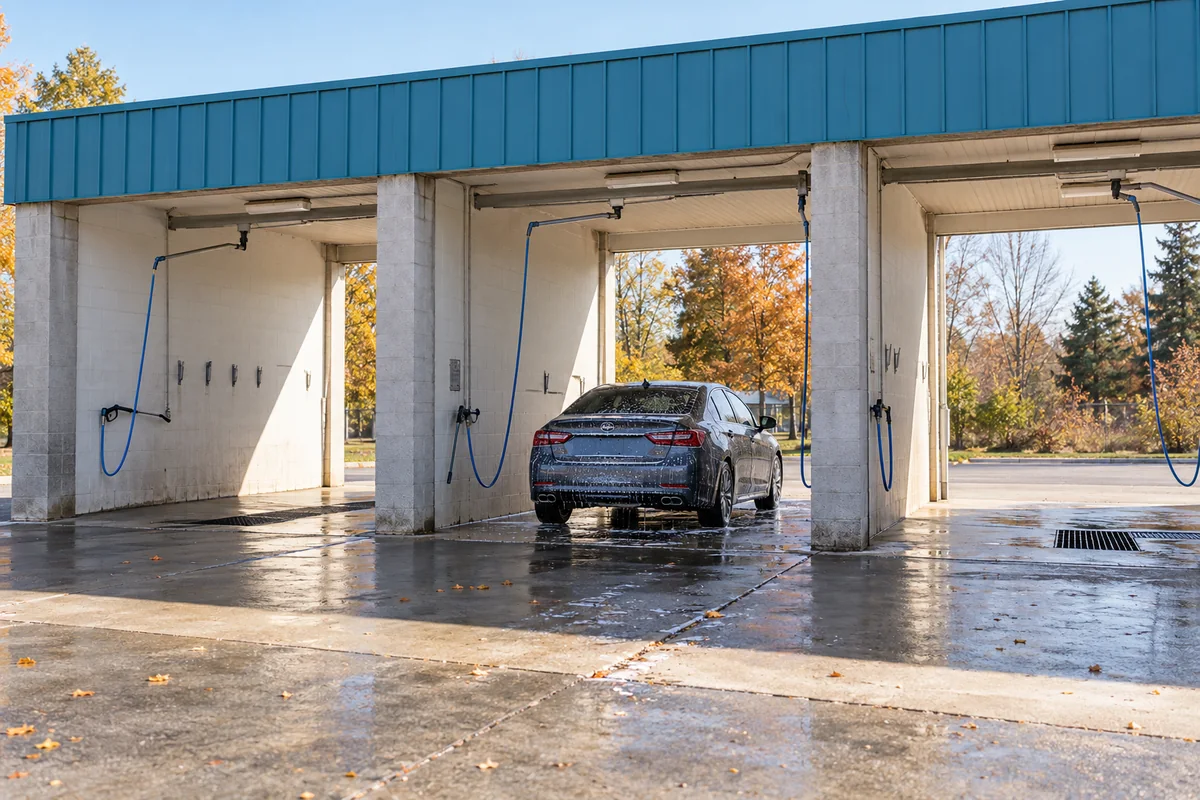
An express conveyor tunnel moves the vehicle through equipment stages. In an in-bay automatic, the vehicle remains positioned while equipment moves around it. A self-service bay gives the customer tools such as a pressure wand. Touchless describes a cleaning approach and should not be confused with the site’s entire business model.
Translate format into diligence questions
Review throughput constraints, staffing tasks, equipment condition, utilities, chemicals, site circulation and maintenance. Do not infer a particular margin or labor requirement merely from a format label. The actual system and service package matter.
Match the operating role to the buyer
A low-attendance model still needs inspections, cleaning, customer support, purchasing and repairs. An absentee plan requires a realistic replacement-labor and service arrangement. Put those costs into the earnings and cash-flow scenarios.
Check property suitability before conversion
Changing format can require equipment, layout, utilities, drainage, queue and local approval work. Obtain professional plans and authority feedback before assuming an existing wash can be converted cheaply or at all.
A useful next step
Write down the actual decision, the facts already supported and the records still missing. Use the guides and tools to move from a general topic to a reproducible calculation or evidence request. Bring transaction-specific legal, tax, environmental and financing questions to the appropriate professional.
Sources and scope
Public guidance reviewed October 17, 2026. Rules and individual transaction facts can change; a source does not establish a particular property’s compliance, financing approval or value.
Match the equipment description to the actual operation
A format comparison is useful when it changes inspection scope or the buyer’s role. It becomes misleading when it attaches a universal earnings margin, resale multiple or staffing promise to a label. Inspect the actual wash mechanism and service package.
| Format | Vehicle movement and service model | Evidence to inspect |
|---|---|---|
| Conveyor tunnel | Vehicle is conveyed through equipment stages; service packages vary | Conveyor safety/condition, throughput, staffing, queues, maintenance and utilities |
| In-bay automatic | Vehicle is positioned while a gantry or equipment travels around it | Gantry/system condition, cycle downtime, payment/control integration and service support |
| Self-service bays | Customer uses tools such as wand/brush; layout and payment vary | Bay condition, pressure/chemical delivery, payment uptime, drains and routine site work |
| Touchless approach | Describes the cleaning mechanism; not a complete ownership/format model | Actual equipment, chemical/utility needs and compatible operating process |
Compare costs with an equal definition
An illustrative site with fewer paid staff may still require owner inspection, cleaning, purchasing, customer support and outside repair service. If the buyer intends to be absent, assign those tasks and budget the replacement arrangement. Do not call the owner’s unpaid time free.
Likewise, higher physical capacity does not prove higher cash generation. Demand, pricing, collection, queues, downtime, utilities and capital needs determine how capacity translates into financial results. Reconcile actual monthly records rather than inserting a format-average revenue estimate.
A practical format-fit worksheet
List the buyer’s intended tasks, available technical/management support, desired property control and capital constraints. For each candidate, add actual equipment condition, documented costs and transfer dependencies. A format that fits one operating role may be unsuitable for another.
Before converting a site, obtain a written technical scope, realistic total project budget and authority feedback on the proposed facts. A different bay arrangement can affect circulation, utilities, drainage and approvals. This comparison does not establish that conversion is permitted or economically feasible.